What is Scoliosis?
|
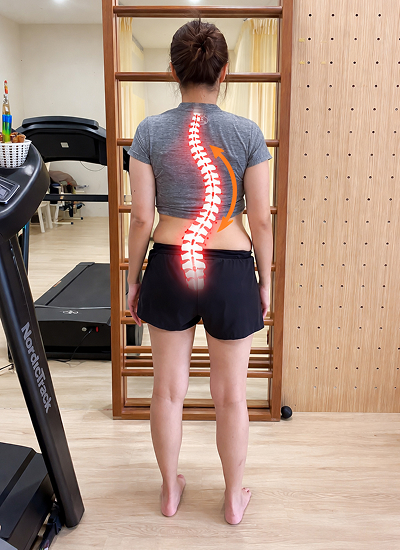
Scoliosis is a condition characterized by a side-to-side curvature of the spine measuring greater than 10 degrees. On an X-ray, the spine of a person with scoliosis appears more like an “S” or “C” shape rather than a straight vertical line. These spinal curves may cause visible changes in posture, such as uneven shoulders, uneven hips, or a tilted waistline, depending on where the curve is located along the spine.
Idiopathic scoliosis is the most common type of scoliosis. The term idiopathic means that the exact cause is unknown. It most frequently develops in preteens and teenagers, particularly during growth spurts. Adolescent Idiopathic Scoliosis (AIS) is about 10 times more common in girls than in boys.
|
|
|
Overview of Scoliosis
|
| Feature
|
Description
|
| Sideways curvature of the spine greater than 10°
|
| Preteens and teenagers
|
| Idiopathic scoliosis
|
| ~10 times more common in girls
|
| “S” or “C” curve on X-ray
|
|
|
|
|
Do I Have Scoliosis?
|
Doctors or physiotherapists can detect scoliosis by performing a simple physical examination of the back.
During the examination:
|
- You will stand in a relaxed position with your arms at your sides.
- The doctor or physiotherapist will observe your back from behind, checking for:
- Curvature of the spine
- Shoulder blade asymmetry
- Uneven waistline
- Any trunk shift or imbalance
|
| You will also be asked to bend forward at the waist (known as the forward bend test). This allows the clinician to observe spinal rotation, which may cause:
|
- A rib prominence in the upper back
- A flank or waist prominence in the lower back
|
| These signs may indicate the presence of scoliosis.
|
|
|
|
|

|
| Suspected Scoliosis
|
|
|
| If scoliosis is suspected after the physical examination, the doctor will usually order X-rays of the entire spine, from the neck to the pelvis, taken from back and side views. These images help confirm the presence of spinal curvature and determine its severity.
|
|
|
|
|
|
| Present Scoliosis
|
|
|
| If scoliosis is present, the doctor will measure the spinal curve using the Cobb angle, which is expressed in degrees. This measurement helps determine the severity of the scoliosis and guides the appropriate treatment approach.
|
|
|
|
|
Confirmed Scoliosis
|
Once scoliosis is confirmed, your doctor will discuss suitable treatment options with you or may refer you to a specialist.
Treatment options may include:
|
- Routine monitoring of the spinal curve (and in some cases, physiotherapy) if the curvature is mild
- Wearing a brace to help prevent the curve from progressing during growth
- Surgery for patients with severe curves causing discomfort or other health complications
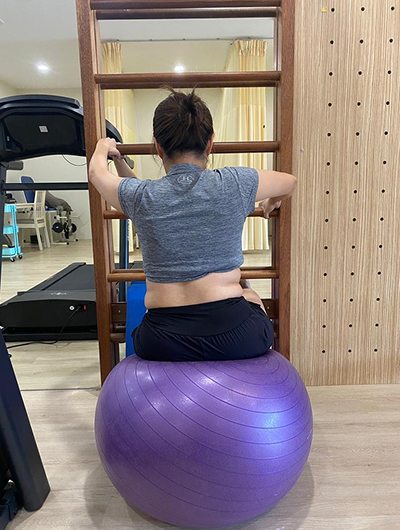
- The Schroth Method – a specialized non-surgical physiotherapeutic scoliosis-specific exercise (PSSE) program developed in the 1920s.
|
| This method uses three-dimensional, individualized exercises focusing on:
|
- Rotational angular breathing
- Active self-elongation
- Postural correction
|
| The goal is to slow or stop curve progression, improve posture, reduce pain, and enhance lung function.
|
|
|
|
|
|
Do You Think You Have Scoliosis?
|
| If you notice uneven shoulders, back asymmetry, or changes in posture, it may be helpful to have your spine checked. Come for a professional assessment and personalized treatment at Trust Physiotherapy Centre. Our physiotherapists are here to help you detect scoliosis early and manage it effectively.
|
|
|
Prepared By:
Annusha Tamilselvan
Physiotherapy Supervisor
Trust Physiotherapy Centre (Nusa Bestari Branch)
|