What is Plantar Fasciitis?
|
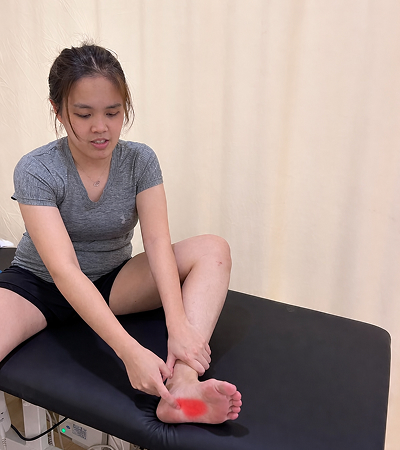
Plantar fasciitis is one of the most common causes of heel pain in adults. It occurs when the plantar fascia, a thick band of tissue that supports the arch of the foot, becomes irritated or damaged.
Although it was previously thought to be an inflammatory condition, research shows that plantar fasciitis is mainly a degenerative condition caused by repeated stress and small tears in the plantar fascia over time.
This condition affects about 10% of people during their lifetime and is more common in women and runners. |
|
|
 |
|
| |
Causes and Risk Factors
|
| Plantar fasciitis is usually caused by repeated strain on the plantar fascia. Several factors can increase the risk, including: |
| |
 |
 |
| Limited ankle flexibility (reduced ankle dorsiflexion) |
|
|
 |
|
| Obesity or excess body weight |
|
|
 |
|
| Leg length differences |
|
|
 |
|
| Flat feet or high arches |
|
|
| |
 |
|
| Long-distance running or excessive physical activity |
|
|
 |
|
| Jobs that require prolonged standing or walking |
|
|
 |
|
| Certain autoimmune conditions such as rheumatoid arthritis |
|
|
| |
Common Symptoms
|
| The most typical symptom of plantar fasciitis is heel pain, especially: |
- Sharp pain at the bottom of the heel
- Pain that is worst during the first few steps in the morning
|
- Pain that improves after some movement
- Pain that may return after long periods of standing or walking
|
|
| Some people may also experience tenderness around the inner side of the heel. In about 30% of cases, both feet may be affected. |
| |
How is Plantar Fasciitis Diagnosed?
|
| Physical Examination |
Imaging Tests |
| Doctors or physiotherapists usually diagnose plantar fasciitis through medical history and physical examination. One commonly used test is the Windlass test, which stretches the plantar fascia to see if it triggers heel pain. |
Imaging tests may be used when the diagnosis is unclear. |
|
| |
| X-ray |
Ultrasound |
MRI |
- Helps rule out bone problems.
- Heel spurs may be seen, but they are not always the cause of pain.
|
- A reliable and commonly used imaging method.
- Shows thickening of the plantar fascia.
- Can also guide injections if treatment is needed.
|
- Usually reserved for severe or long-lasting cases.
- Helps rule out other conditions such as fascia tears or bone swelling.
|
|
| |
Treatment Options
|
| Most patients improve with non-surgical treatment, and about 80% recover within 12 months. |
| |
|
|
| |
1. Physical Therapy
Physiotherapy is one of the most effective treatments. It may include:
- Stretching exercises for the plantar fascia and calf muscles
- Strengthening exercises for the foot and ankle
- Gait correction
- Manual therapy
Both stretching and strengthening programs have been shown to reduce pain and improve walking function.
2. Medication
Doctors may prescribe non-steroidal anti-inflammatory drugs (NSAIDs) to help reduce pain and discomfort.
3. Night Splints
Night splints keep the foot in a stretched position during sleep. Some patients find relief, although research results are mixed.
4. Shockwave Therapy (ESWT)
Extracorporeal Shock Wave Therapy (ESWT) is a non-invasive treatment that uses sound waves to stimulate healing in the plantar fascia.
Studies show that ESWT can significantly reduce pain and improve function.
5. Other Non-Surgical Treatments
Additional treatments may include:
- Low-level laser therapy
- Therapeutic ultrasound
- Foot orthotics (arch support)
- Activity modification
6. Injections
For persistent cases, injections may be considered. Common options include:
- Corticosteroid injections – provide short-term pain relief but may have risks if used repeatedly.
- Platelet-Rich Plasma (PRP) – uses the patient’s own blood to promote healing.
- Dextrose prolotherapy – stimulates tissue repair
These treatments are often guided by ultrasound for greater accuracy.
7. Surgery
Surgery is usually considered only when all other treatments fail and pain becomes chronic. The most common procedure is endoscopic plantar fasciotomy, which releases part of the plantar fascia to reduce tension. |
| |
Key Point:
Most people with plantar fasciitis recover successfully with conservative treatment such as physiotherapy, stretching exercises, and activity modification. |
| |
Are you plantar fasciatis?
|
| Our Physiotherapy experts are here to help you recover. |
 |
| Book Your Appointment Now |
| |
Prepared By:
Annusha Tamilselvan
Physiotherapy Supervisor
Trust Physiotherapy Centre (Nusa Bestari Branch) |